The latest Maastrichtian was conspicuous for climatic fluctuations characterized by global cooling and rapid biotic evolution just before the Cretaceous–Paleogene (K/Pg) mass extinction caused by the Chicxulub impact. Reconstructing the climate and vegetation dynamics of this interval is essential for deepening our understanding of the climatic instability at the end of the Late Cretaceous and exploring the causal mechanisms of the mass extinction.
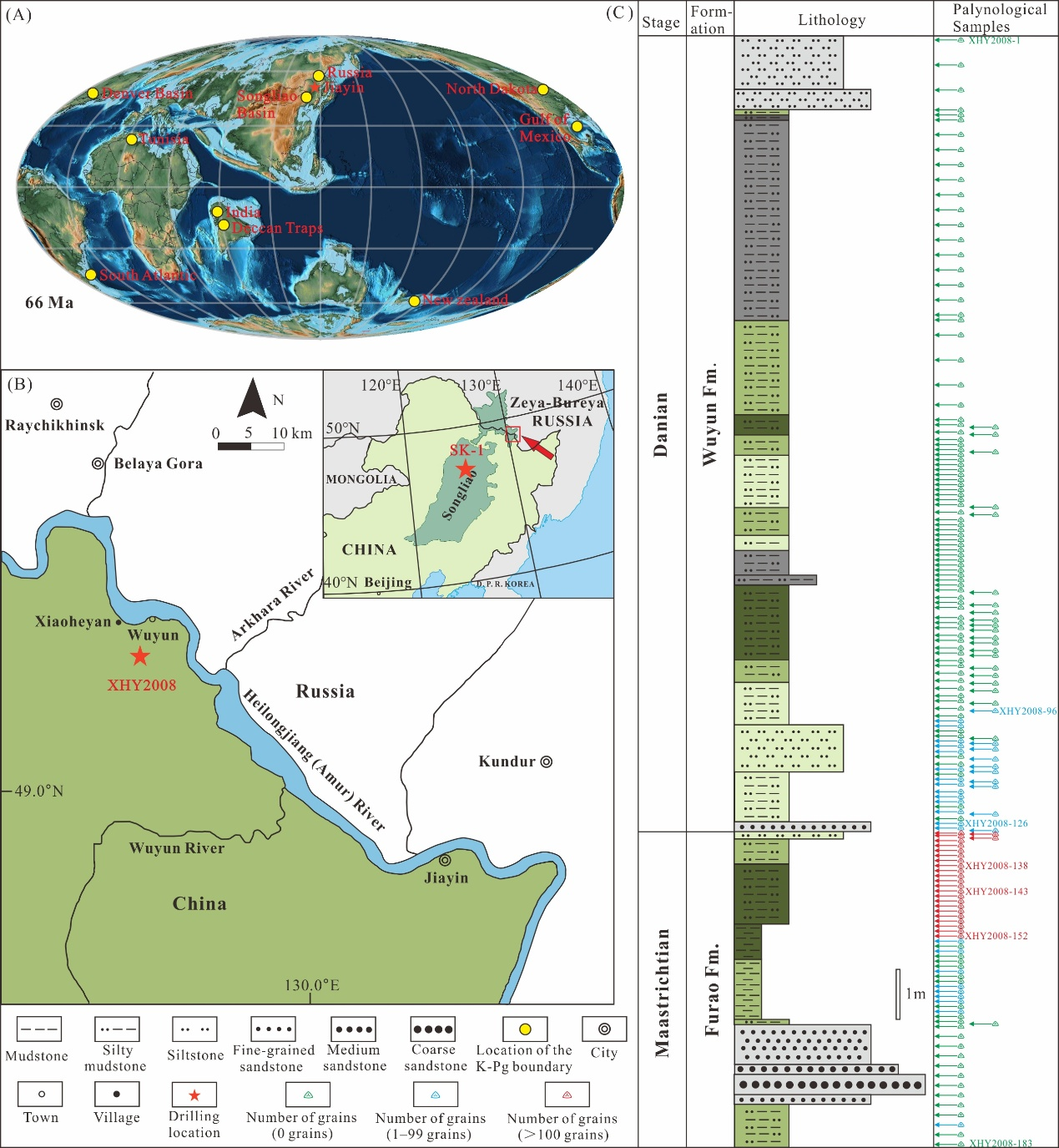
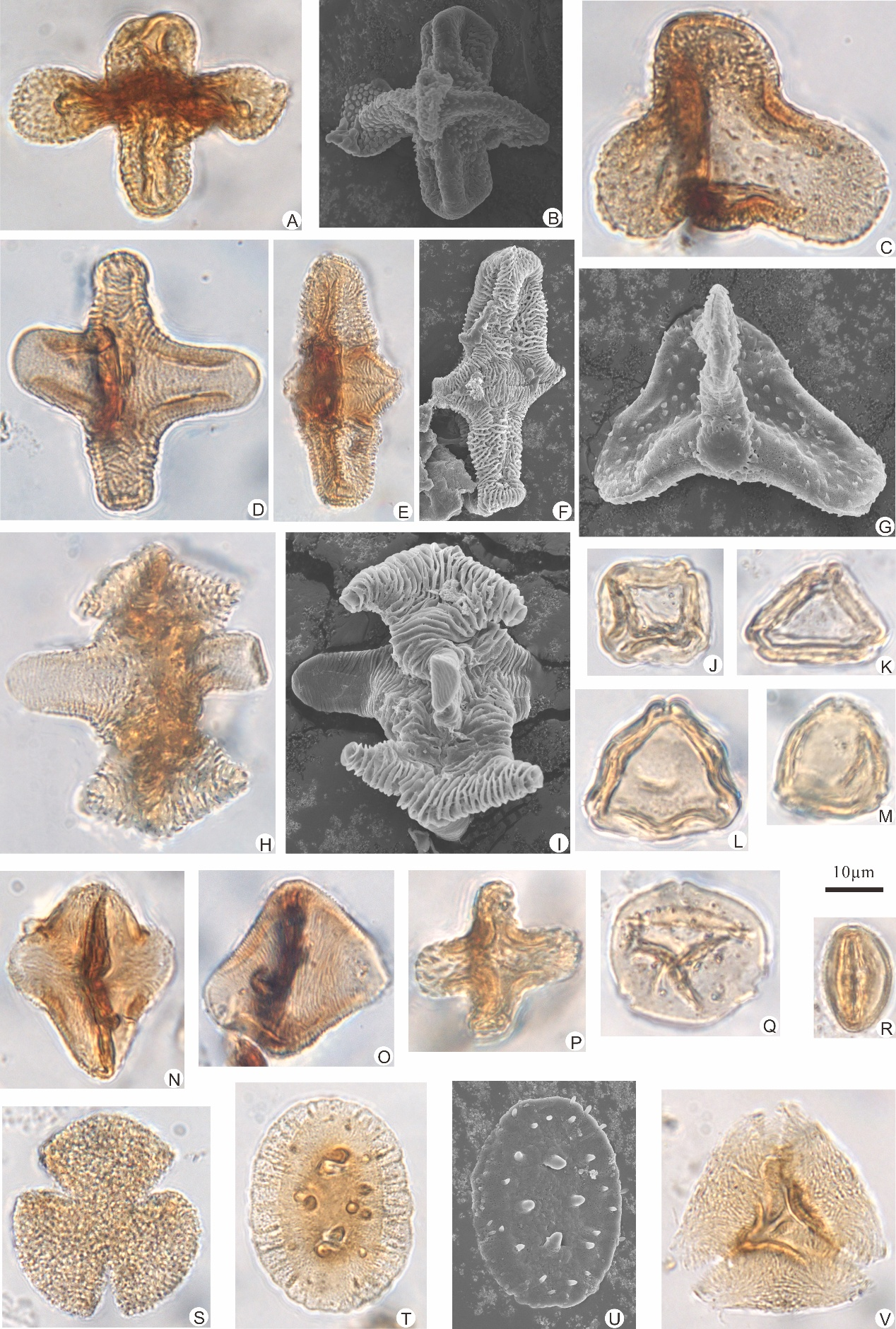
The research team of Prof. Yuewu Sun from the International Center for Geoscience Research and Education in Northeast Asia and the Research Center of Paleontology and Stratigraphy, Jilin University has been conducting high-resolution palynological studies on the Upper Cretaceous–lower Paleocene cores of XHY2008 borehole in Jiayin of Heilongjiang Province since 2021, funded by the National Natural Science Foundation of China. Based on detailed analysis and identification of 183 palynological samples collected from the uppermost Furao Formation, three distinct palynological assemblages are recognized in ascending stratigraphic order: (1) the Gabonisporis–Pinuspollenites–Aquilapollenites (GPA) assemblage; (2) the Laevigatosporites–Monocolpopollenites–Ulmoideipites (LMU) assemblage; and (3) the Osmundacidites–Pseudointegricorpus–Wodehouseia (OPW) assemblage. These assemblages provide crucial evidence for understanding the composition of the latest Maastrichtian palynofloras and their environmental responses.
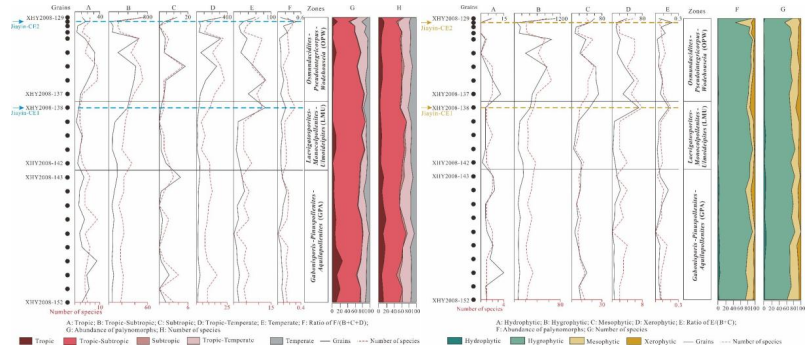
The present climate of Jiayin is a typical temperate climate. However, it was a warm and humid subtropical climate during the latest Maastrichtian. This might represent the great hot wave climate from the Cretaceous greenhouse climate in the mid-latitude regions of the Northern Hemisphere even in end-Maastrichtian global cooling interval. Meanwhile, based on quantitative analyses of the palynomorphs, combined with Principal Component Analysis (PCA) and the ecological affinity statistics method, two significant transient cooling and drying events were identified, and named the Jiayin cooling event 1 (Jiayin-CE1) and Jiayin cooling event 2 (Jiayin-CE2). These two climatic perturbations occurred within approximately 34 kyr before the K/Pg mass extinction. During these cooling events, the climate shifted suddenly from a humid subtropical to a sub-humid temperate climate. The cooling was abrupt, whereas post-cooling recovery was comparatively slow. These abrupt climatic changes events might reflect the high-frequency climatic oscillations during the latest Maastrichtian cooling phase and bring significant implications for better understanding the K/Pg mass extinction.
The above-mentioned research findings, titled "Latest Maastrichtian climate changes: Insights from high-resolution palynological data from the XHY2008 borehole, Jiayin, NE China" have been published in the journal "Cretaceous Research". DOI: 10.1016/j.cretres.2025.106270.
